From Couch to Trail - How to Get Bike-Fit this Spring
An easy training guide to help you return to cycling
If your bike has spent winter in the shed and you’ve spent rather more of it than planned on the couch, then you are not alone! But fear not - getting ready for spring riding doesn’t need an intensive training programme or a radical personality change into a pro cyclist.
Just a few short rides can help you rediscover your confidence and become comfortable on the bike again. Over six weeks, you can gradually progress from an easy ride close to home to a day ride or multi-day trip on one of Otago’s cycle trails.
Give yourself a spring WOF...
Just as it’s important to give your bike a warrant of fitness at the end of winter, it’s also sensible to work on your own fitness and riding skills. But, this doesn’t mean that you need to be an athlete to enjoy Otago’s trail network.
On the contrary, Otago’s Great Rides are designed to be enjoyed at a relaxed pace by recreational riders, including people who haven’t ridden regularly for years.
If you allow around four to six weeks of regular riding this can help build your fitness, comfort and confidence so that you can enjoy an easy-paced multi-day cycling holiday. Some people will need more time and others less; your starting point, health, intended itinerary and whether you are riding a conventional bike or an E-Bike will all make a difference.
To enjoy the Great Rides, your goal should not be to reach a particular speed – a cycling holiday is not a race! Instead, your intent should be to gradually become comfortable with things like:
- Spending longer on the bike, building up to riding for two or more consecutive days
- Riding on gravel trails and bike handling skills on rougher surfaces
- Changing gears and braking smoothly
- Managing your nutrition during a longer ride
- Managing and planning your ride according to the distance and difficulty
Plus, it’s also timely to refresh your trail etiquette:
- Riding predictably and with courtesy around other trail users
- Signalling and communicating when riding in a group

From spring blossoms and blooms in Queenstown...

...to snow-capped hills and lambs in the fields in Central Otago. Spring has sprung on the Otago Trails.
Should you prepare differently for an E-Bike ride?
Whilst E-Bikes certainly make cycling more accessible, they don’t remove the need for preparation – you’ll still need to spend time in the saddle, practice controlling the bike safely on different trail surfaces and riding on consecutive days. E-Bikes are also heavier than conventional bicycles, which can affect starting, stopping, and manoeuvring.
Useful skills to practice when you’re getting back on your E-Bike after a break, or if you’re a beginner include:
- Starting in a low assistance mode
- Changing assistance levels while riding
- Braking smoothly
- Stopping and restarting on a gentle slope
- Riding without maximum assistance (turbo mode) all the time
- Lifting or pushing the bike (many E-Bikes have a ‘walk’ mode which assists pushing)
- Monitoring and managing battery use over a realistic distance (“range anxiety” is a thing)! Do not assume the maximum advertised battery range will apply to every ride. Hills, wind, temperature, rider weight, panniers and assistance level can all influence battery consumption.
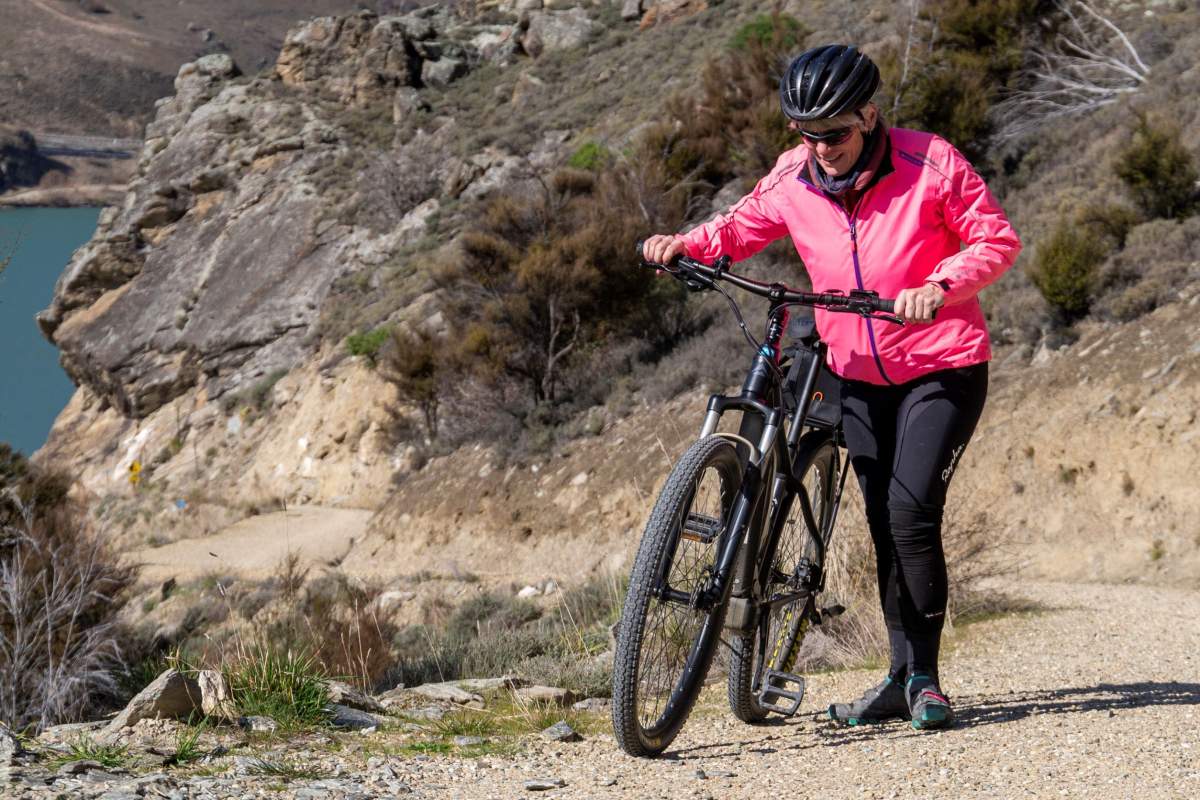
Ensure your E-Bike battery is fully charged and you know its range... they can be very heavy to push!

E-Bikes make the trails more accessible, but you still need good handling skills and to practice trail etiquette
A simple six-week spring riding plan
This easy six-week guide can help you build up to a multi-day spring ride on one of Otago’s cycle trails.
This is just an example and an adaptable framework, not a competitive training programme. Rest, weather and individual health should determine the pace of progression. You can factor in other activities like walking, jogging, swimming or working out in the gym. These all help with your fitness, but there’s nothing like time in the saddle to get bike fit and to toughen up those “seat bones”.
Health note: This article provides general information rather than personalised medical or fitness advice. If you have a medical condition, an injury, unexplained pain or concerns about becoming more active, talk to an appropriate health professional before starting.
Weeks 1 & 2: Restart
Goal: Become comfortable on the bike again.
Aim for two short rides close to home each week of around 60 minutes per ride on flat, smooth terrain. Ride at an easy conversational pace, i.e. you can talk whilst riding without getting out of breath. Additionally, focus on some basic bike skills like smooth braking, efficient use of gears and the overall comfort of your riding position, especially the seat height to avoid knee pain.
Weeks 3 & 4: Build
Goal: Increase time in the saddle.
Gradually increase your ride times. Work towards two rides of about 90 minutes plus one longer outing of 2-3 hours (including stops), adding in a few gentle climbs. Aim for your longer ride to be roughly half the expected duration of your goal for a full day ride at the end of the 6-week programme.
Don’t just focus on the kilometres. Time spent comfortably on the bike is a more useful measure. Pick a ride with several natural stopping or turnaround points (e.g. a café or country pub) so additional distance can be added when you’re comfortable.
Also practice eating and drinking while out riding and get familiar with your kit e.g. the jacket, gloves, bags and repair kit you plan to use on a day ride or multi-day trip. If you haven’t fixed a puncture or replaced an inner tube for a while, it’s a good idea to practice in the comfort of your own home before having to fix a tyre for real out on the trail.
Weeks 5 & 6: Prepare
Goal: Rehearse the real experience.
Aim to complete two rides on consecutive days and include some gravel surfaces and moderate hills where appropriate. Include a full day ride of around 4-5hours (including rest and coffee stops). Ride with the gear you plan to carry and practice managing your E-Bike battery, if applicable.

Spending time in the saddle before a full or multi-day trip will help improve your comfort and enjoyment. Photo: Lake Dunstan Trail in spring
Easy Spring training itinerary ideas on the Otago Trails
RESTART: a relaxed return to the trail with rides up to 2hours.
Clyde to Alexandra Loop (20km | 1.5 - 2 hours)
The riverside trail between Clyde and Alexandra is 12km, mainly flat and suitable for an easy first ride. It provides a rewarding progression from shorter practice rides because it feels like a real journey between two towns. Return along the Otago Central Rail Trail (8km).
This loop offers straightforward logistics and a good opportunity to reacquaint yourself with your bike to check comfort, gear and bike setup. Plus, there are numerous opportunities for a coffee (or wine) along the way.
Otago Central Rail Trail - Ranfurly to Waipiata (12km return | 1.5 hours)
An easy return ride along the Otago Central Rail Trail from Ranfurly to the Waipiata Country Hotel for lunch and back.
Roxburgh Gorge Trail - Alexandra to Doctor’s Point (20km Return | 1.5 - 2hours)
Once you’re feeling more confident, then a slightly hillier option to try would be an out-and-back ride from Alexandra on the Roxburgh Gorge Trail.

Easy spring riding on the Alexandra - Clyde River Track

Spring on the Roxburgh Gorge Trail between Alexandra and Doctor's Point (20km return)
BUILD: A Half Day Adventure – Building Confidence
Plan a relaxed ride lasting around 2-3 hours, including social coffee stops, lunch and rest breaks. Use this half-day ride to test what you will need on a longer trail outing.
The options below can be ridden as a one-way ride with a pre-arranged shuttle, or as a return ride as you progress.
Otago Central Rail Trail
The Otago Central Rail Trail can readily be divided into shorter rides using its numerous different access points, with several bike tour operators offering shuttle services to help with one-way logistics. Whilst the Rail Trail is a grade 1 ride (easiest) and mostly flat or with a gentle include, when planning a spring ride, factor in the prevailing NW wind which tends to build in the afternoon.
- Alexandra to Chatto Creek (17km | 1h 45min) – a local’s favourite with lunch at the Chatto Creek Tavern waiting at the end of the ride.
- Middlemarch to Hyde (27.5km | 2-3 hours) – ride next to the dramatic Rock and Pillar Range and Taieri River to Hyde where coffee or lunch awaits.
Clutha Gold Trail
Two good out-and-back options along the grade 2 (easy) Clutha Gold Trail:
- Roxburgh to Miller’s Flat (40km | 3-4hours return) – an easy ride along the Clutha River with lunch at the Miller’s Flat Tavern or Faigan’s Café as your reward and afternoon tea in Roxburgh upon your return.
- Beaumont to Lawrence (40km | 3-4hours return) – includes the impressive Big Hill Tunnel before Lawrence where there are good coffee and lunch options. (A visit to Gabriel’s Gully, where the Otago goldrush started, is worthwhile side trip which adds approx. 10km return).
Queenstown Trails
The Queenstown Trails is a network comprised of over 150km of trails, and it’s easy to stitch together half or full day rides. Two popular options include:
- Arrowtown to Gibbston (23km | 2hrs one-way). Starting in Arrowtown follow the Arrow River Bridges Trail and connect to the Gibbston River Trail, finishing with lunch at one of the wineries. Take advantage of a shuttle back to Arrowtown after lunch for a one-way ride.
- Arrowtown to Arthur’s Point (16.5km | 1.5 hours one-way) - the Wharehuanui Trail connects Arrowtown to Arthur’s Point with beautiful mountain views along the way. You’re spoiled for choice with cafes and lunch options at either end of the trail.

The Gibbston Trail is an easy spring ride in Queenstown...

...that leads you into the "Valley of the Vines" for a long lunch at a winery (photo: Gibbston Valley Winery)

The Clutha Gold Trail is an easy grade 2 trail with good short ride options.

Likewise, with trail towns dotted along the length of the Otago Central Rail Trail its easy to find spring ride to suit your ability.
PREPARE: A Day Ride
Time to progress to a genuine day ride. Planning for a full day on the trail is key. You’ll need to carefully assess the trail conditions; grade, distance, and the availability of cafes and other services en route. Check the weather forecast allowing contingency for spring-weather e.g. rain showers and wind. You’ll also need to carry more food and water than on the first rides, plus be self-sufficient with tools, first aid kit and warm / wet weather gear.
Otago Central Rail Trail - Auripo (Ida Valley) to Clyde (55km | 5-6 hours)
This is a popular one-way route and is supported by bike tour operators which offer both bike hire and transfers. The ride includes the Poolburn Viaduct and Tunnels with numerous options for coffee and lunch stops in Lauder, Omakau, Ophir, Alexandra and Clyde at the end of the trail. Shuttle pick-ups available from Chatto Creek or Alexandra for a shorter ride.
Roxburgh Gorge Trail (29km | 4-6 Hours)
This is a classic day ride through the dramatic Roxburgh Gorge and offers a genuine wilderness experience. It’s a 20km ride between Alexandra and Roxburgh Dam on a grade 2-3 trail which does include some steeper, switchback climbs. Currently a water taxi is required for the 12km section between Doctor’s Point and Shingle Creek (bookings essential). From Roxburgh Dam it’s then an easy 9km ride along the Clutha River to Roxburgh. Packages including bike hire and transfers are available from local operators.
Queenstown Trail – The Loop (30km | 4-6 Hours)
The Queenstown Loop incorporates three Queenstown trails and has a great mixture of single track, gravel trail, commuter trail and a small amount of road. It includes some more tricky grade 3 sections.
Lake Dunstan Trail (44km | 5-6 hours)
The Lake Dunstan Trail is a step up in terms of terrain and challenge. The route between Cromwell and Clyde includes some long climbs and exposed, narrow sections of trail. It’s a spectacular and rewarding day ride but is only recommended for physically fit and experienced riders.
Shuttle services (including water taxi) are available to make one-way trips easy.

The Lake Dunstan is a big step up in terms of fitness and experience.
STEP UP: a two-day Otago Central Rail Trail sampler
A short overnight journey (referred to by more seasoned cyclists as a “credit card ride”) offers a taste of multi-day cycling without committing to the full trail. You can refine what you need to take – and more importantly what you don’t need – for a multi-day trips.
The Rail Trial is the ideal introduction to an overnight ride as it’s well supported by tour companies which offer bike hire, transport and luggage transfers making logistics simple and meaning you can travel light. The Rail Trail is also an easy, grade 1 trail, so even if you’re legs are a bit tired on day 2, the trail and gradient is easy... and, critically, you’re never too far away from a café or country pub...
Day one
A moderate morning ride followed by a long lunch, a stop for an off-trail activity or an early check-in at your accommodation.
- Either, Clyde to Omakau or Ophir (37km | 3-4hrs)
- Or, Middlemarch to Waipiata (53km | 5hrs)
Day two
A similar distance to the first day, allowing you to discover how the legs feel on a second consecutive day.
- Either, Omakau to Ranfurly (55km | 5hrs)
- Or, Waipiata to Oturehua (32km | 3hrs)
For more Rail Trail itinerary ideas check out their website here.

The Otago Central Rail Trail is an ideal introduction to multi-day bike trips.

Related Stories
-

Spring Bike Maintenance Checklist
Get your bicycle or E-Bike ready for spring with this practical maintenance checklist covering tyres, brakes, gears, chains and safety checks.
Read more about Spring Bike Maintenance Checklist -
E-Biking the Otago Trails What You Need to Know
New to E-biking or planning your first multi-day cycle holiday? Here’s what you need to know before exploring Otago’s Great Rides.
Read more about E-Biking the Otago Trails What You Need to Know -
Clutha Gold Trail Beginners Guide
A beginners guide to the Clutha Gold Trail
Read more about Clutha Gold Trail Beginners Guide -
Gravel Biking Otago
A guide to gravel biking in Otago - trail tips and routes.
Read more about Gravel Biking Otago -
Credit Card Rides
A credit card ride is a “light” version of a fully self-supported bikepacking trip.
Read more about Credit Card Rides